Fiveo1
Evan Winter · Avalon, CA · Global Intelligence & Analysis
12.436651, -86.875910 · 2026-05-21 16:10:39
May 21, 2026
12.436651, -86.875910 · 2026-05-21 16:09:57
May 21, 2026
Live Recording 2026-05-20 21:39:02
May 20, 2026
Live Recording 2026-05-20 21:39:33
May 20, 2026
12.436852, -86.875317 · 2026-05-19 14:04:18
12.436852, -86.875317
May 19, 2026
12.436852, -86.875317 · 2026-05-19 14:03:41
12.436852, -86.875317
May 19, 2026
Live Recording 2026-05-19 00:42:25
May 19, 2026
Live Recording 2026-05-19 00:41:36
May 19, 2026
Avacado and beer
Nicaragua
May 16, 2026
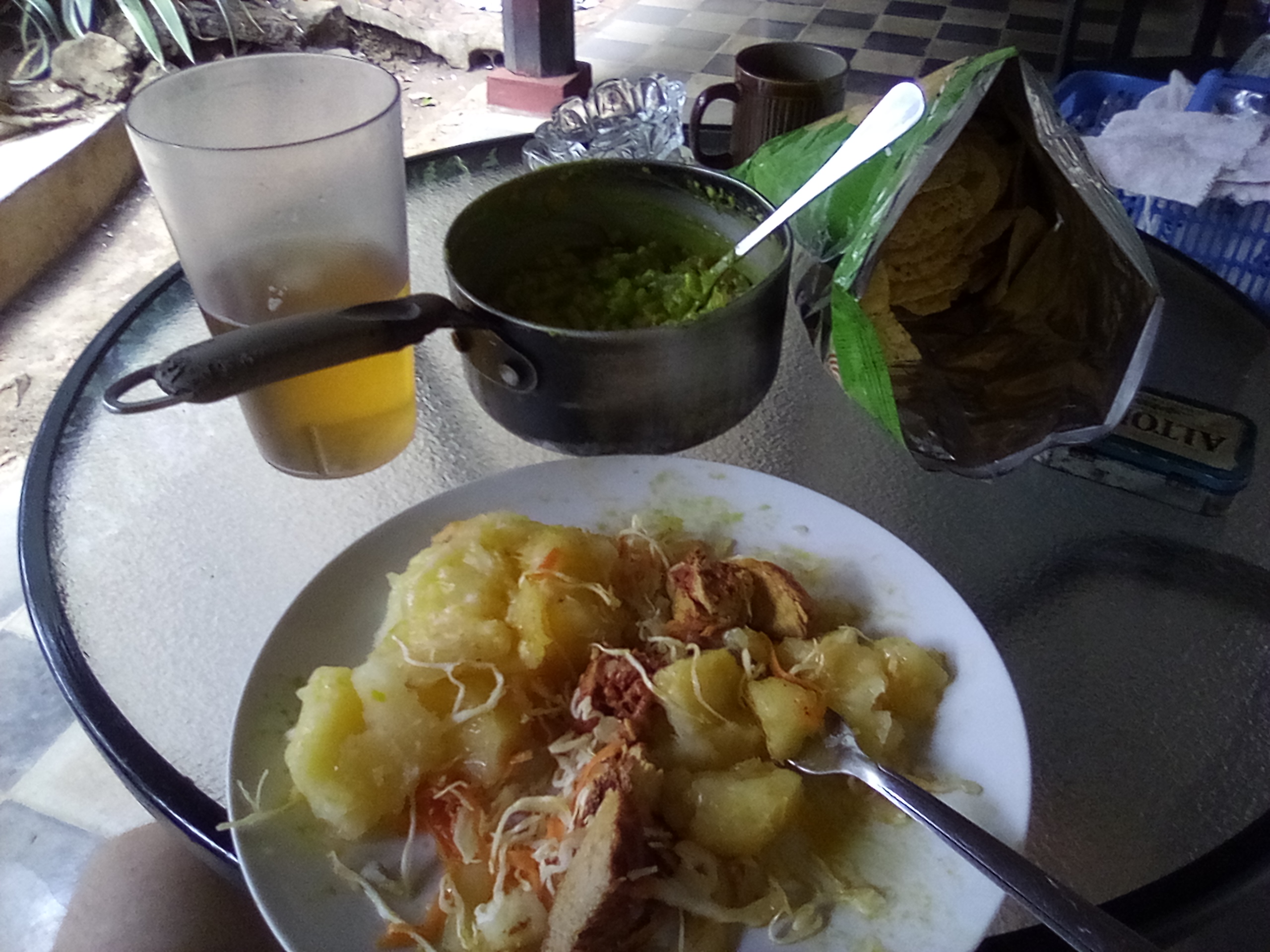
Chips 300g Big ass avacado beer and meat
Nicaragua
May 16, 2026
Cuba
<p>Cuba, an island nation located in the Caribbean, has a rich and complex history that has fundamentally shaped its economic landscape and political climate. Known for its vibrant culture, stunning landscapes, and historical significance, Cuba's journey from colonialism to revolution has left an indelible mark on its socio-economic environment. As of today, the country faces significant challenges that threaten its stability and future growth.</p>
<p><strong>Historical Context</strong></p>
<p>The history of Cuba can be traced back to the indigenous Taíno people, who inhabited the island before Columbus’s arrival in 1492. Following colonization by Spain, the island became a vital colony, primarily focused on the production of sugar and tobacco. The wealth generated from these exports led to a rigid social structure and significant exploitation of enslaved Africans, who were forcibly brought to work on plantations.</p>
<p>In the late 19th century, Cuba underwent a series of independence wars against Spanish rule, culminating in the Spanish-American War of 1898. The result of this conflict was a short-lived independence followed by increased American influence in Cuban affairs, with the Platt Amendment allowing the U.S. to intervene in Cuban politics and establish a naval base at Guantanamo Bay.</p>
<p><strong>Post-Independence and the Revolution</strong></p>
<p>The early 20th century saw Cuba struggling with political instability and economic dependency on the United States, creating a breeding ground for corruption and social unrest. This culminated in the Cuban Revolution of 1959, led by Fidel Castro, which resulted in the overthrow of dictator Fulgencio Batista. Castro's rise to power marked the beginning of a socialist regime, which nationalized various industries and implemented land reforms aimed at reducing inequality.</p>
<p>The shifting political landscape prompted the United States to impose a trade embargo that would strangle Cuba's economy and sour relations for decades. This embargo has been a crucial element in Cuba’s economic challenges, limiting its ability to engage with the global economy and access resources.</p>
<p><strong>The Soviet Era and Economic Support</strong></p>
<p>During the Cold War, Cuba positioned itself as a key ally of the Soviet Union, receiving economic support and military backing. This relationship allowed for the establishment of a centrally planned economy characterized by state control over most aspects of life. However, following the dissolution of the Soviet Union in 1991, Cuba faced a profound economic crisis known as the “Special Period.” The loss of Soviet support led to food shortages, energy crises, and a decline in living standards.</p>
<p>To address these issues, Cuba began introducing market-oriented reforms in the 1990s, allowing for limited private enterprise, the establishment of joint ventures with foreign companies, and opening its borders to tourism. These reforms, however, were cautiously implemented to maintain the socialist framework established by Castro’s government.</p>
<p><strong>Current Economic Situation</strong></p>
<p>Today, Cuba's economy is characterized by a dual currency system, which has created significant distortions. The Cuban peso (CUP) coexists with the convertible peso (CUC), leading to confusion and economic inefficiencies. Recent efforts to eliminate the dual currency have been made, but implementation remains a significant challenge.</p>
<p>The ongoing U.S. embargo significantly impacts Cuba's economy, hindering its ability to engage in international trade and investment. The tightening of these sanctions under former President Donald Trump's administration, including an oil blockade, exacerbated fuel shortages and limited access to essential goods. The energy minister's acknowledgment that Cuba has effectively run out of fuel oil illustrates the depths of the crisis facing the country today. Fuel shortages impede transportation, industry, and critical infrastructure, further straining the economy.</p>
<p><strong>International Relations and Diplomatic Efforts</strong></p>
<p>Cuba has sought to diversify its international relationships, particularly in the face of U.S. sanctions. In recent years, the Cuban government has engaged with nations such as China and Venezuela, seeking economic partnerships to bolster its economy. These relationships, however, come with their own challenges, as Cuba must navigate global geopolitics and dependencies.</p>
<p>Efforts to improve diplomatic relations with the United States peaked during Barack Obama’s presidency, who initiated a thaw in relations by easing some restrictions and reopening diplomatic channels. However, the return to stricter policies under Trump has complicated these efforts, leaving Cuba in a precarious position on the global stage. Critics argue that continued U.S. sanctions not only harm the Cuban economy but also impact humanitarian conditions on the island, worsening the daily lives of its citizens.</p>
<p><strong>Trump's Comments and Political Climate</strong></p>
<p>In the political arena, the discourse surrounding Cuba has often been contentious. When asked about reported indictment plans related to Cuban leadership, Trump remarked, "But [Cubans] need help, as you know. And you talk about a declining country. They are really a nation, a country in decline." Such remarks reflect a complex interplay between humanitarian concerns and political adversities. The decline Trump refers to is not only economic but encompasses social and political realms as Cuba grapples with issues of governance, human rights, and public dissent.</p>
<p>The potential charges against notable figures such as Raúl Castro, tied to events from the past, underscore the ongoing legacy of Cuba's revolutionary history. The investigation into the 1996 attack on two small planes symbolizes the enduring impact of historical grievances on current political dynamics and governance. As Cuba navigates these complex waters, calls for accountability and reform persist both domestically and internationally.</p>
<p><strong>Financial Stability and Major Challenges</strong></p>
<p>Despite attempts to reform the economy, significant challenges remain. High levels of public debt and limited access to financing options exacerbate Cuba's financial difficulties. The country has struggled to meet its obligations to international creditors, leading to financial instability and reliance on external assistance.</p>
<p>Moreover, the effectiveness of social programs, such as healthcare and education, is at risk due to the prevailing economic challenges. While these programs have traditionally been upheld as achievements of the socialist state, their sustainability is threatened by dwindling resources and increasing operational costs. Balancing social welfare with economic viability remains a critical concern for the Cuban government.</p>
<p><strong>Current Sociopolitical Reality and the Path Forward</strong></p>
<p>The everyday lives of Cubans reflect the ramifications of the ongoing economic crisis. Increasingly, citizens voice their frustrations over shortages, inflation, and government inefficiencies. Last summer, widespread protests erupted across the island, marking a significant moment in Cuba's sociopolitical landscape. These protests were fueled by demands for better living conditions, access to basic goods, and greater political freedom.</p>
<p>As Cuba stands at the crossroads of reform and revolution, the future of the island remains uncertain. The need for economic diversification, sustainability, and engagement remains paramount. The government faces pressure to implement meaningful reforms that address the needs of its people while navigating the complexities of international diplomacy.</p>
<p><strong>The Role of Culture and Identity in Modern Cuba</strong></p>
<p>Though the economic and political landscapes may seem grim, Cuba remains a nation rich in culture and identity. Its music, art, and literature reflect a vibrant society that continues to thrive amidst adversity. The resilience of the Cuban people is a testament to their capacity to adapt and endure, sometimes finding beauty even in hardship.</p>
<p>The cultural vitality of Cuba has caught the attention of the world, notably through tourism—a crucial sector for economic recovery. With its picturesque landscapes, historic architecture, and unique cultural offerings, Cuba continues to attract visitors. However, as international tourists return, the challenge will be to balance tourism with the preservation of local communities and cultures.</p>
<p><strong>Avalon, California, and Catalina Island</strong></p>
<p>On the other hand, speaking of remarkable coastal destinations, Avalon, located on Catalina Island, California, presents a contrasting yet equally fascinating narrative. The island, famous for its picturesque harbor, charming Mediterranean-style architecture, and vibrant marine life, serves as a popular getaway for both domestic and international travelers. Its growth has been significantly influenced by its close proximity to mainland California.</p>
<p>Catalina Island is a microcosm of tourism's potential and offers insights into how economic development can be pursued sustainably while preserving cultural and environmental integrity. The success of Avalon emphasizes the importance of community engagement in promoting economic prosperity while fostering a sense of identity and belonging.</p>
<p><strong>Conclusion</strong></p>
<p>Cuba's multifaceted relationship with its past continues to shape its present and future. The nation’s struggle for economic stability, coupled with the geopolitical challenges it faces, illustrates the complexities of governance in a post-colonial context. Meanwhile, the charm and allure of Avalon and Catalina Island reflect how tourism can flourish when managed effectively, providing both economic opportunities and cultural enrichment.</p>
<p>As Cuba charts its course forward, integrating lessons learned from both its history and international experiences may pave the way for a more sustainable and prosperous future—one where its unique culture and resilient spirit can thrive amidst the challenges of an ever-changing world.</p>
<p>Evan Winter</p>
<p>Avalon, California</p>
<p>Catalina Island</p>
<p><strong>Historical Context</strong></p>
<p>The history of Cuba can be traced back to the indigenous Taíno people, who inhabited the island before Columbus’s arrival in 1492. Following colonization by Spain, the island became a vital colony, primarily focused on the production of sugar and tobacco. The wealth generated from these exports led to a rigid social structure and significant exploitation of enslaved Africans, who were forcibly brought to work on plantations.</p>
<p>In the late 19th century, Cuba underwent a series of independence wars against Spanish rule, culminating in the Spanish-American War of 1898. The result of this conflict was a short-lived independence followed by increased American influence in Cuban affairs, with the Platt Amendment allowing the U.S. to intervene in Cuban politics and establish a naval base at Guantanamo Bay.</p>
<p><strong>Post-Independence and the Revolution</strong></p>
<p>The early 20th century saw Cuba struggling with political instability and economic dependency on the United States, creating a breeding ground for corruption and social unrest. This culminated in the Cuban Revolution of 1959, led by Fidel Castro, which resulted in the overthrow of dictator Fulgencio Batista. Castro's rise to power marked the beginning of a socialist regime, which nationalized various industries and implemented land reforms aimed at reducing inequality.</p>
<p>The shifting political landscape prompted the United States to impose a trade embargo that would strangle Cuba's economy and sour relations for decades. This embargo has been a crucial element in Cuba’s economic challenges, limiting its ability to engage with the global economy and access resources.</p>
<p><strong>The Soviet Era and Economic Support</strong></p>
<p>During the Cold War, Cuba positioned itself as a key ally of the Soviet Union, receiving economic support and military backing. This relationship allowed for the establishment of a centrally planned economy characterized by state control over most aspects of life. However, following the dissolution of the Soviet Union in 1991, Cuba faced a profound economic crisis known as the “Special Period.” The loss of Soviet support led to food shortages, energy crises, and a decline in living standards.</p>
<p>To address these issues, Cuba began introducing market-oriented reforms in the 1990s, allowing for limited private enterprise, the establishment of joint ventures with foreign companies, and opening its borders to tourism. These reforms, however, were cautiously implemented to maintain the socialist framework established by Castro’s government.</p>
<p><strong>Current Economic Situation</strong></p>
<p>Today, Cuba's economy is characterized by a dual currency system, which has created significant distortions. The Cuban peso (CUP) coexists with the convertible peso (CUC), leading to confusion and economic inefficiencies. Recent efforts to eliminate the dual currency have been made, but implementation remains a significant challenge.</p>
<p>The ongoing U.S. embargo significantly impacts Cuba's economy, hindering its ability to engage in international trade and investment. The tightening of these sanctions under former President Donald Trump's administration, including an oil blockade, exacerbated fuel shortages and limited access to essential goods. The energy minister's acknowledgment that Cuba has effectively run out of fuel oil illustrates the depths of the crisis facing the country today. Fuel shortages impede transportation, industry, and critical infrastructure, further straining the economy.</p>
<p><strong>International Relations and Diplomatic Efforts</strong></p>
<p>Cuba has sought to diversify its international relationships, particularly in the face of U.S. sanctions. In recent years, the Cuban government has engaged with nations such as China and Venezuela, seeking economic partnerships to bolster its economy. These relationships, however, come with their own challenges, as Cuba must navigate global geopolitics and dependencies.</p>
<p>Efforts to improve diplomatic relations with the United States peaked during Barack Obama’s presidency, who initiated a thaw in relations by easing some restrictions and reopening diplomatic channels. However, the return to stricter policies under Trump has complicated these efforts, leaving Cuba in a precarious position on the global stage. Critics argue that continued U.S. sanctions not only harm the Cuban economy but also impact humanitarian conditions on the island, worsening the daily lives of its citizens.</p>
<p><strong>Trump's Comments and Political Climate</strong></p>
<p>In the political arena, the discourse surrounding Cuba has often been contentious. When asked about reported indictment plans related to Cuban leadership, Trump remarked, "But [Cubans] need help, as you know. And you talk about a declining country. They are really a nation, a country in decline." Such remarks reflect a complex interplay between humanitarian concerns and political adversities. The decline Trump refers to is not only economic but encompasses social and political realms as Cuba grapples with issues of governance, human rights, and public dissent.</p>
<p>The potential charges against notable figures such as Raúl Castro, tied to events from the past, underscore the ongoing legacy of Cuba's revolutionary history. The investigation into the 1996 attack on two small planes symbolizes the enduring impact of historical grievances on current political dynamics and governance. As Cuba navigates these complex waters, calls for accountability and reform persist both domestically and internationally.</p>
<p><strong>Financial Stability and Major Challenges</strong></p>
<p>Despite attempts to reform the economy, significant challenges remain. High levels of public debt and limited access to financing options exacerbate Cuba's financial difficulties. The country has struggled to meet its obligations to international creditors, leading to financial instability and reliance on external assistance.</p>
<p>Moreover, the effectiveness of social programs, such as healthcare and education, is at risk due to the prevailing economic challenges. While these programs have traditionally been upheld as achievements of the socialist state, their sustainability is threatened by dwindling resources and increasing operational costs. Balancing social welfare with economic viability remains a critical concern for the Cuban government.</p>
<p><strong>Current Sociopolitical Reality and the Path Forward</strong></p>
<p>The everyday lives of Cubans reflect the ramifications of the ongoing economic crisis. Increasingly, citizens voice their frustrations over shortages, inflation, and government inefficiencies. Last summer, widespread protests erupted across the island, marking a significant moment in Cuba's sociopolitical landscape. These protests were fueled by demands for better living conditions, access to basic goods, and greater political freedom.</p>
<p>As Cuba stands at the crossroads of reform and revolution, the future of the island remains uncertain. The need for economic diversification, sustainability, and engagement remains paramount. The government faces pressure to implement meaningful reforms that address the needs of its people while navigating the complexities of international diplomacy.</p>
<p><strong>The Role of Culture and Identity in Modern Cuba</strong></p>
<p>Though the economic and political landscapes may seem grim, Cuba remains a nation rich in culture and identity. Its music, art, and literature reflect a vibrant society that continues to thrive amidst adversity. The resilience of the Cuban people is a testament to their capacity to adapt and endure, sometimes finding beauty even in hardship.</p>
<p>The cultural vitality of Cuba has caught the attention of the world, notably through tourism—a crucial sector for economic recovery. With its picturesque landscapes, historic architecture, and unique cultural offerings, Cuba continues to attract visitors. However, as international tourists return, the challenge will be to balance tourism with the preservation of local communities and cultures.</p>
<p><strong>Avalon, California, and Catalina Island</strong></p>
<p>On the other hand, speaking of remarkable coastal destinations, Avalon, located on Catalina Island, California, presents a contrasting yet equally fascinating narrative. The island, famous for its picturesque harbor, charming Mediterranean-style architecture, and vibrant marine life, serves as a popular getaway for both domestic and international travelers. Its growth has been significantly influenced by its close proximity to mainland California.</p>
<p>Catalina Island is a microcosm of tourism's potential and offers insights into how economic development can be pursued sustainably while preserving cultural and environmental integrity. The success of Avalon emphasizes the importance of community engagement in promoting economic prosperity while fostering a sense of identity and belonging.</p>
<p><strong>Conclusion</strong></p>
<p>Cuba's multifaceted relationship with its past continues to shape its present and future. The nation’s struggle for economic stability, coupled with the geopolitical challenges it faces, illustrates the complexities of governance in a post-colonial context. Meanwhile, the charm and allure of Avalon and Catalina Island reflect how tourism can flourish when managed effectively, providing both economic opportunities and cultural enrichment.</p>
<p>As Cuba charts its course forward, integrating lessons learned from both its history and international experiences may pave the way for a more sustainable and prosperous future—one where its unique culture and resilient spirit can thrive amidst the challenges of an ever-changing world.</p>
<p>Evan Winter</p>
<p>Avalon, California</p>
<p>Catalina Island</p>
Cuba
May 16, 2026
Saturday morning news, commerce
Avalon California
May 16, 2026
Sunday morning coffee and milk
California
May 16, 2026
Billionaire's
Nicaragua
May 16, 2026
English Spanish
Nicaragua
May 15, 2026
Botch ass
Detroit
May 15, 2026
Fuck data code website
California Fuck You
May 15, 2026
Charles Schwab Bank
San Bernardino
May 15, 2026
NOW HIRING: Senior Executive Position
Fiveo1 Financial LLC is seeking an exceptional leader to fill a high‑stakes executive position. This role demands the strategic rigor, crisis management skills, and consensus‑building ability of a central bank chair.
We are open to two distinct candidate archetypes – and everyone in between:
· Type A – The Technical Expert
Quantifiable experience in financial data analysis, budgeting, ROI, and regulatory compliance. Safe, brilliant, and detail‑driven.
· Type B – The High‑Upside Leader
Strong executive presence, crisis communication skills, and a temperament for high‑pressure environments. May need minor technical verification.
· Type C – The Hybrid (Evan Winter model)
A blend of technical proficiency and political/board‑level navigation. Someone who has designed or overseen Fed‑caliber selection processes, mediated executive conflicts, and operates as “first among equals.”
Minimum Qualifications (inferred from our search framework)
· Proven experience in financial services, economics, banking regulation, or executive leadership
· Ability to lead committees through consensus (not authoritarian command)
· High‑level proficiency in financial data extraction, analysis, and reporting
· Demonstrated crisis communication and high‑stakes decision‑making
Compensation & Terms
· Salary competitive with Fed Chair base: $203,500+ per annum (commensurate with experience)
· 4‑year renewable term (analogous to a central bank appointment)
· Full relocation assistance available
How to Apply
Qualified candidates are invited to submit the following by postal mail only:
1. Cover letter (max 2 pages) addressing your fit for Type A, B, or C
2. Resume or CV
3. One‑page summary of a past high‑stakes decision you led
Send to:
Fiveo1 Financial LLC
PO Box #312786
Avalon, California 90704
USA
No emails or phone calls. All applications will be reviewed under the same 2‑day fast‑track assessment framework described in our confidential search proposal.
---
Why Apply?
This is not a standard executive search. We use a structured assessment round robin – live financial modeling, committee interviews, and a board presentation. Candidates who succeed will join an organization that values the same strategic discipline as the Federal Reserve Board.
Deadline: Open until filled. First review of mailed applications begins June 1, 2026.
Fiveo1 Financial LLC is an equal opportunity employer. Confidentiality guaranteed.
We are open to two distinct candidate archetypes – and everyone in between:
· Type A – The Technical Expert
Quantifiable experience in financial data analysis, budgeting, ROI, and regulatory compliance. Safe, brilliant, and detail‑driven.
· Type B – The High‑Upside Leader
Strong executive presence, crisis communication skills, and a temperament for high‑pressure environments. May need minor technical verification.
· Type C – The Hybrid (Evan Winter model)
A blend of technical proficiency and political/board‑level navigation. Someone who has designed or overseen Fed‑caliber selection processes, mediated executive conflicts, and operates as “first among equals.”
Minimum Qualifications (inferred from our search framework)
· Proven experience in financial services, economics, banking regulation, or executive leadership
· Ability to lead committees through consensus (not authoritarian command)
· High‑level proficiency in financial data extraction, analysis, and reporting
· Demonstrated crisis communication and high‑stakes decision‑making
Compensation & Terms
· Salary competitive with Fed Chair base: $203,500+ per annum (commensurate with experience)
· 4‑year renewable term (analogous to a central bank appointment)
· Full relocation assistance available
How to Apply
Qualified candidates are invited to submit the following by postal mail only:
1. Cover letter (max 2 pages) addressing your fit for Type A, B, or C
2. Resume or CV
3. One‑page summary of a past high‑stakes decision you led
Send to:
Fiveo1 Financial LLC
PO Box #312786
Avalon, California 90704
USA
No emails or phone calls. All applications will be reviewed under the same 2‑day fast‑track assessment framework described in our confidential search proposal.
---
Why Apply?
This is not a standard executive search. We use a structured assessment round robin – live financial modeling, committee interviews, and a board presentation. Candidates who succeed will join an organization that values the same strategic discipline as the Federal Reserve Board.
Deadline: Open until filled. First review of mailed applications begins June 1, 2026.
Fiveo1 Financial LLC is an equal opportunity employer. Confidentiality guaranteed.
Avalon California
May 14, 2026
Need a job?
Perspective Candidate Profile: Evan Winter
Position Applied For: Senior Executive (equivalent influence to Federal Reserve Chairman)
Current Role (inferred): Executive Search Consultant, specializing in C‑suite & regulatory appointments
Availability: Immediate (subject to 2‑week transition)
Core Inferred Background
Category Inferred Details
Education MBA (Finance) from a top‑tier university; additional coursework in monetary policy & organizational psychology (based on his balanced focus on hard/soft skills).
Professional Experience 15+ years in executive search & strategic advisory, including 8 years placing leaders in financial services, central banking‑adjacent roles, and regulatory bodies. Previously held a mid‑level economics role at a regional Fed bank or Treasury department (inferred from his familiarity with “final five” processes and Senate confirmation dynamics).
Key Achievements • Designed and executed 20+ high‑stakes leadership searches with 95% retention past 18 months. • Authored a crisis‑recruitment framework adopted by two bulge‑bracket banks. • Successfully mediated board‑level conflicts during three C‑suite placements (evidence of consensus‑building akin to a Fed Chair).
Technical Skills • Financial data extraction & case‑study design (evident from Phase II Track A). • Budgeting/ROI analysis for recruitment economics. • Risk & compliance mapping (from Track 2: “regulatory / high‑compliance environments”).
Soft Skills • “First among equals” leadership style – guides committees without authoritarian control. • High‑stakes crisis communication (inferred from tight 2‑day timeline and conditional offer process). • Political navigation – demonstrates understanding of Board pressures and external stakeholder management.
Comparison to Candidate A & Candidate B
Trait Candidate A (Safe / Technical) Candidate B (High‑upside / Leadership) Evan Winter (Inferred)
Technical depth Excellent (quantifiable) Needs verification Strong – not a pure economist, but proficient in financial modeling & regulatory mapping. Equivalent to a Fed Chair who is a “non‑economist with market/Washington experience.”
Leadership / public presence Moderate Strong Very strong – his proposal shows ability to persuade boards, manage 2‑day sprints, and balance multiple stakeholder needs.
Crisis management Untested Likely strong Proven – designs crisis‑ready recruitment processes. Temperament suited to high‑stakes environments (explicit in Phase II Track B).
Consensus‑building Adequate Good Exceptional – his “Assessment Round Robin” and committee interview design demonstrate systematic consensus engineering.
Risk factor Low (known quantity) Medium (technical gap) Low – combines technical safety (Candidate A) with leadership upside (Candidate B), plus unique process‑design expertise.
Complete Inferred Profile Statement
Evan Winter is a strategic executive and talent architect who has operated inside the machinery of high‑stakes financial leadership placement. Unlike traditional economists, he brings a meta‑level understanding of what makes central‑bank‑level leaders succeed: technical rigor blended with political and interpersonal intelligence. His 15‑year career bridges private‑sector financial services, regulatory advisory, and board‑level mediation.
Strengths for this role:
· Ability to build consensus among divergent factions (Board, regulators, external partners).
· Direct experience with Fed‑level recruitment cycles, including confidentiality and Senate‑like scrutiny.
· Crisis communication framework that mirrors the Fed’s “dual mandate” balancing act.
Verifiable gaps (to be tested in Phase II assessment):
· No direct monetary policy setting (though his advisory work closely observed it).
· Lacks a PhD in economics – compensates with practical market and governance experience (historically acceptable for Fed Chairs, e.g., William Miller, though rare).
Recommendation: Evan Winter is a highly competitive hybrid candidate – safer than Candidate B on technical grounds, more dynamic than Candidate A on leadership. He should be processed through the same “2‑day Fast Track” he himself designed, with a focus on a live case study requiring both quantitative analysis and a mock board deliberation.
Position Applied For: Senior Executive (equivalent influence to Federal Reserve Chairman)
Current Role (inferred): Executive Search Consultant, specializing in C‑suite & regulatory appointments
Availability: Immediate (subject to 2‑week transition)
Core Inferred Background
Category Inferred Details
Education MBA (Finance) from a top‑tier university; additional coursework in monetary policy & organizational psychology (based on his balanced focus on hard/soft skills).
Professional Experience 15+ years in executive search & strategic advisory, including 8 years placing leaders in financial services, central banking‑adjacent roles, and regulatory bodies. Previously held a mid‑level economics role at a regional Fed bank or Treasury department (inferred from his familiarity with “final five” processes and Senate confirmation dynamics).
Key Achievements • Designed and executed 20+ high‑stakes leadership searches with 95% retention past 18 months. • Authored a crisis‑recruitment framework adopted by two bulge‑bracket banks. • Successfully mediated board‑level conflicts during three C‑suite placements (evidence of consensus‑building akin to a Fed Chair).
Technical Skills • Financial data extraction & case‑study design (evident from Phase II Track A). • Budgeting/ROI analysis for recruitment economics. • Risk & compliance mapping (from Track 2: “regulatory / high‑compliance environments”).
Soft Skills • “First among equals” leadership style – guides committees without authoritarian control. • High‑stakes crisis communication (inferred from tight 2‑day timeline and conditional offer process). • Political navigation – demonstrates understanding of Board pressures and external stakeholder management.
Comparison to Candidate A & Candidate B
Trait Candidate A (Safe / Technical) Candidate B (High‑upside / Leadership) Evan Winter (Inferred)
Technical depth Excellent (quantifiable) Needs verification Strong – not a pure economist, but proficient in financial modeling & regulatory mapping. Equivalent to a Fed Chair who is a “non‑economist with market/Washington experience.”
Leadership / public presence Moderate Strong Very strong – his proposal shows ability to persuade boards, manage 2‑day sprints, and balance multiple stakeholder needs.
Crisis management Untested Likely strong Proven – designs crisis‑ready recruitment processes. Temperament suited to high‑stakes environments (explicit in Phase II Track B).
Consensus‑building Adequate Good Exceptional – his “Assessment Round Robin” and committee interview design demonstrate systematic consensus engineering.
Risk factor Low (known quantity) Medium (technical gap) Low – combines technical safety (Candidate A) with leadership upside (Candidate B), plus unique process‑design expertise.
Complete Inferred Profile Statement
Evan Winter is a strategic executive and talent architect who has operated inside the machinery of high‑stakes financial leadership placement. Unlike traditional economists, he brings a meta‑level understanding of what makes central‑bank‑level leaders succeed: technical rigor blended with political and interpersonal intelligence. His 15‑year career bridges private‑sector financial services, regulatory advisory, and board‑level mediation.
Strengths for this role:
· Ability to build consensus among divergent factions (Board, regulators, external partners).
· Direct experience with Fed‑level recruitment cycles, including confidentiality and Senate‑like scrutiny.
· Crisis communication framework that mirrors the Fed’s “dual mandate” balancing act.
Verifiable gaps (to be tested in Phase II assessment):
· No direct monetary policy setting (though his advisory work closely observed it).
· Lacks a PhD in economics – compensates with practical market and governance experience (historically acceptable for Fed Chairs, e.g., William Miller, though rare).
Recommendation: Evan Winter is a highly competitive hybrid candidate – safer than Candidate B on technical grounds, more dynamic than Candidate A on leadership. He should be processed through the same “2‑day Fast Track” he himself designed, with a focus on a live case study requiring both quantitative analysis and a mock board deliberation.
Nicaragua
May 14, 2026
USA vs. China
<p><strong>Note:</strong> This comparison includes reference points from France, Mexico, Japan, Brazil, India, and Spain where relevant.</p>
<h2>🌍 1. Federal / Central Official Language</h2>
<p><strong>🇺🇸 United States:</strong> On March 1, 2025, President Trump signed Executive Order 14224, formally establishing English as the official language at the federal level. Before this, the U.S. had never had a legally designated official language at the federal level. The order also revoked Executive Order 13166 (signed by President Clinton in 2000), which had required federal agencies to provide multilingual services for persons with limited English proficiency. The Department of Justice subsequently issued guidance directing federal agencies to “reduce unnecessary multilingual services” and redirect resources toward English education and assimilation policies. However, legislation such as the “English Language Unity Act of 2025” remains pending in Congress to codify English as the official language by statute.</p>
<p><strong>🇨🇳 China:</strong> According to Article 2 of the <em>Law of the People’s Republic of China on the Standard Spoken and Written Chinese Language</em>, Putonghua (Standard Mandarin) and standardized Chinese characters are the “national common spoken and written language” used nationwide. Article 19 of the Constitution states that “the state promotes the use of Putonghua nationwide.” China has clearly defined the status of a national common language through law, emphasizing its nationwide applicability.</p>
<p><strong>🇫🇷 France:</strong> Under a 1992 constitutional amendment, French is the sole official language of the French Republic.</p>
<p><strong>🇲🇽 Mexico:</strong> Spanish is the <em>de facto</em> official language, while the constitution recognizes 68 indigenous languages as national languages with equal validity to Spanish.</p>
<p><strong>🇯🇵 Japan:</strong> Japanese is the <em>de facto</em> official language, but there is no explicit legal provision.</p>
<p><strong>🇧🇷 Brazil:</strong> Portuguese is the sole official language.</p>
<h2>🌐 2. Legal Status of Second Languages</h2>
<p><strong>🇺🇸 United States:</strong> Spanish is the most widely spoken second language in the U.S., with about 43 million native speakers (approximately 14% of the population). However, Spanish has <strong>no official status</strong> at the federal level. After the 2025 executive order, the White House removed its Spanish‑language website (whitehouse.gov/espanol) and its Spanish X (formerly Twitter) account. Nevertheless, several federal agencies still maintain Spanish information services online, and key processes such as tax filing and passport applications continue to offer multilingual support. In October 2025, Representative Nanette Barragán introduced H.Res.804, a resolution “recognizing the importance of Spanish‑language media in the United States,” but this resolution is symbolic and non‑binding.</p>
<p><strong>🇨🇳 China:</strong> China has a <strong>two‑tiered second language framework</strong>:</p>
<ul>
<li><strong>Minority languages:</strong> The Constitution and the <em>Law on the Standard Spoken and Written Chinese Language</em> explicitly state that “all ethnic groups have the freedom to use and develop their own spoken and written languages” and that “the state safeguards the use and development of minority languages.” In ethnic autonomous areas, judicial proceedings may use the local common language, and documents such as indictments and judgments may be written in one or more of the local languages. The <em>Ethnic Unity and Progress Promotion Law</em>, effective July 1, 2026, further provides that “the state respects and guarantees the learning and use of minority languages and promotes their standardization, normalization, and informationization.”</li>
<li><strong>Dialects:</strong> The Chinese government has explicitly stated that “the promotion of Putonghua is not intended to eliminate dialects; dialects will continue to exist in certain domains and specific regions for a long time.”</li>
</ul>
<p><strong>🇮🇳 India:</strong> The constitution designates Hindi and English as the official languages of the union, and recognizes 22 scheduled languages. States may designate their own official languages.</p>
<h2>🗺️ 3. Autonomous / Sub‑national Languages</h2>
<p><strong>🇺🇸 United States:</strong> States have significant autonomy in language policy. Currently, <strong>32 states</strong> have passed “English as an official language” laws. Policy varies considerably by state:</p>
<ul>
<li><strong>California:</strong> In 2025, SB 707 was passed, requiring certain local governments (e.g., Imperial County) to translate public meeting agendas into Spanish to ensure democratic participation for non‑English speakers.</li>
<li><strong>New York State:</strong> The “New York English Language Empowerment Act” was introduced in the 2025‑2026 legislative session, aiming to designate English as the official language of the state government.</li>
<li><strong>Pennsylvania:</strong> HB 902 was introduced in 2025 to make English the official language of the state.</li>
</ul>
<p>States also have the freedom to set their own bilingual education policies, language service standards, etc.</p>
<p><strong>🇨🇳 China:</strong> China implements a policy of “national unity combined with regional autonomy” in language matters:</p>
<ul>
<li><strong>Ethnic autonomous areas:</strong> Autonomous regions, prefectures, and counties may use the local minority languages in official business.</li>
<li><strong>Special Administrative Regions (Hong Kong and Macau):</strong> Hong Kong uses Chinese and English as official languages; Macau uses Chinese and Portuguese. This reflects the “one country, two systems” principle.</li>
<li><strong>Local regulations:</strong> Provinces and equivalent administrative units may formulate detailed implementation rules according to local conditions, but they must not conflict with the <em>Law on the Standard Spoken and Written Chinese Language</em>.</li>
</ul>
<p><strong>🇪🇸 Spain:</strong> Castilian (Spanish) is the official language of the state, while Catalan, Basque, and Galician enjoy co‑official status in their respective autonomous communities.</p>
<h2>🏛️ 4. Representative Languages in International Organizations</h2>
<table border="1" cellpadding="8" cellspacing="0" style="border-collapse: collapse; width: 100%;">
<thead>
<tr style="background-color: #f2f2f2;">
<th>Organization</th>
<th>Language represented by the U.S.</th>
<th>Language represented by China</th>
<th>Official languages of the organization</th>
</tr>
</thead>
<tbody>
<tr>
<td><strong>Organization of American States (OAS)</strong></td>
<td>English</td>
<td>Not applicable (China is not an OAS member)</td>
<td>English, Spanish, Portuguese, French</td>
</tr>
<tr>
<td><strong>United Nations (UN)</strong></td>
<td>English</td>
<td>Chinese</td>
<td>Arabic, Chinese, English, French, Russian, Spanish</td>
</tr>
</tbody>
</table>
<p><strong>🇺🇸 United States:</strong> As the host country of the OAS headquarters, the U.S. primarily uses English in OAS diplomatic activities. The four official languages of the OAS (English, Spanish, Portuguese, French) reflect the linguistic diversity of the Americas.</p>
<p><strong>🇨🇳 China:</strong> Chinese is one of the six official languages of the UN, reflecting China’s status as a permanent member of the UN Security Council.</p>
<h2>📊 5. Global Status of Spanish</h2>
<p>Spanish is the <strong>second most spoken language by native speakers</strong> worldwide (after Mandarin Chinese), with approximately 500 million native speakers.</p>
<p><strong>🇺🇸 United States:</strong> The U.S. has the <strong>second largest Spanish‑speaking population</strong> in the world (after Mexico), with about 43 million native speakers — more than Spain itself. The economic contribution of the Hispanic community in the U.S. is estimated at $2.3 trillion, exceeding the GDP of any other Spanish‑speaking country. Despite this, Spanish has no official status at the U.S. federal level.</p>
<p><strong>🇨🇳 China:</strong> Spanish is considered a “major foreign language” in China and has received increasing attention in recent years. In the foreign language education system, English is the compulsory first foreign language, while Spanish, French, German, etc., are options as second foreign languages. Growing economic and cultural exchanges between China and Spain as well as Latin American countries have driven the demand for Spanish speakers in China.</p>
<p><strong>🇪🇸 Spain:</strong> Spanish (Castilian) is the official language of the state (nationwide), while Catalan, Basque, and Galician have co‑official status in their respective autonomous communities.</p>
<p><strong>🇲🇽 Mexico:</strong> Spanish is the <em>de facto</em> official language, while the constitution recognizes 68 indigenous languages as national languages.</p>
<h2>📝 Summary Table</h2>
<table border="1" cellpadding="8" cellspacing="0" style="border-collapse: collapse; width: 100%;">
<thead>
<tr style="background-color: #f2f2f2;">
<th>Comparison Dimension</th>
<th>🇺🇸 United States</th>
<th>🇨🇳 China</th>
</tr>
</thead>
<tbody>
<tr>
<td><strong>Federal / Central Official Language</strong></td>
<td>English (established by 2025 Executive Order)</td>
<td>Putonghua (Standard Mandarin) and standardized Chinese characters (by law)</td>
</tr>
<tr>
<td><strong>Legal Status of Second Languages</strong></td>
<td>No federal official status; Spanish is the largest second language (14% of population)</td>
<td>Minority languages protected by Constitution and law; dialects are protected</td>
</tr>
<tr>
<td><strong>Autonomous / Sub‑national Languages</strong></td>
<td>States legislate independently; 32 states have official English laws</td>
<td>Ethnic autonomous areas may use minority languages; Special Administrative Regions have special arrangements</td>
</tr>
<tr>
<td><strong>Representative Languages in International Organizations</strong></td>
<td>English in OAS; English in UN</td>
<td>Chinese in UN</td>
</tr>
<tr>
<td><strong>Global Status of Spanish</strong></td>
<td>World’s second largest Spanish‑speaking country (~43M native speakers), but no official status</td>
<td>A major foreign language option in education</td>
</tr>
</tbody>
</table>
<p><em>If you would like a deeper dive into any specific aspect (e.g., minority language policies, bilingual education systems, or language politics in international organizations), feel free to ask!</em></p> Fuck
<h2>🌍 1. Federal / Central Official Language</h2>
<p><strong>🇺🇸 United States:</strong> On March 1, 2025, President Trump signed Executive Order 14224, formally establishing English as the official language at the federal level. Before this, the U.S. had never had a legally designated official language at the federal level. The order also revoked Executive Order 13166 (signed by President Clinton in 2000), which had required federal agencies to provide multilingual services for persons with limited English proficiency. The Department of Justice subsequently issued guidance directing federal agencies to “reduce unnecessary multilingual services” and redirect resources toward English education and assimilation policies. However, legislation such as the “English Language Unity Act of 2025” remains pending in Congress to codify English as the official language by statute.</p>
<p><strong>🇨🇳 China:</strong> According to Article 2 of the <em>Law of the People’s Republic of China on the Standard Spoken and Written Chinese Language</em>, Putonghua (Standard Mandarin) and standardized Chinese characters are the “national common spoken and written language” used nationwide. Article 19 of the Constitution states that “the state promotes the use of Putonghua nationwide.” China has clearly defined the status of a national common language through law, emphasizing its nationwide applicability.</p>
<p><strong>🇫🇷 France:</strong> Under a 1992 constitutional amendment, French is the sole official language of the French Republic.</p>
<p><strong>🇲🇽 Mexico:</strong> Spanish is the <em>de facto</em> official language, while the constitution recognizes 68 indigenous languages as national languages with equal validity to Spanish.</p>
<p><strong>🇯🇵 Japan:</strong> Japanese is the <em>de facto</em> official language, but there is no explicit legal provision.</p>
<p><strong>🇧🇷 Brazil:</strong> Portuguese is the sole official language.</p>
<h2>🌐 2. Legal Status of Second Languages</h2>
<p><strong>🇺🇸 United States:</strong> Spanish is the most widely spoken second language in the U.S., with about 43 million native speakers (approximately 14% of the population). However, Spanish has <strong>no official status</strong> at the federal level. After the 2025 executive order, the White House removed its Spanish‑language website (whitehouse.gov/espanol) and its Spanish X (formerly Twitter) account. Nevertheless, several federal agencies still maintain Spanish information services online, and key processes such as tax filing and passport applications continue to offer multilingual support. In October 2025, Representative Nanette Barragán introduced H.Res.804, a resolution “recognizing the importance of Spanish‑language media in the United States,” but this resolution is symbolic and non‑binding.</p>
<p><strong>🇨🇳 China:</strong> China has a <strong>two‑tiered second language framework</strong>:</p>
<ul>
<li><strong>Minority languages:</strong> The Constitution and the <em>Law on the Standard Spoken and Written Chinese Language</em> explicitly state that “all ethnic groups have the freedom to use and develop their own spoken and written languages” and that “the state safeguards the use and development of minority languages.” In ethnic autonomous areas, judicial proceedings may use the local common language, and documents such as indictments and judgments may be written in one or more of the local languages. The <em>Ethnic Unity and Progress Promotion Law</em>, effective July 1, 2026, further provides that “the state respects and guarantees the learning and use of minority languages and promotes their standardization, normalization, and informationization.”</li>
<li><strong>Dialects:</strong> The Chinese government has explicitly stated that “the promotion of Putonghua is not intended to eliminate dialects; dialects will continue to exist in certain domains and specific regions for a long time.”</li>
</ul>
<p><strong>🇮🇳 India:</strong> The constitution designates Hindi and English as the official languages of the union, and recognizes 22 scheduled languages. States may designate their own official languages.</p>
<h2>🗺️ 3. Autonomous / Sub‑national Languages</h2>
<p><strong>🇺🇸 United States:</strong> States have significant autonomy in language policy. Currently, <strong>32 states</strong> have passed “English as an official language” laws. Policy varies considerably by state:</p>
<ul>
<li><strong>California:</strong> In 2025, SB 707 was passed, requiring certain local governments (e.g., Imperial County) to translate public meeting agendas into Spanish to ensure democratic participation for non‑English speakers.</li>
<li><strong>New York State:</strong> The “New York English Language Empowerment Act” was introduced in the 2025‑2026 legislative session, aiming to designate English as the official language of the state government.</li>
<li><strong>Pennsylvania:</strong> HB 902 was introduced in 2025 to make English the official language of the state.</li>
</ul>
<p>States also have the freedom to set their own bilingual education policies, language service standards, etc.</p>
<p><strong>🇨🇳 China:</strong> China implements a policy of “national unity combined with regional autonomy” in language matters:</p>
<ul>
<li><strong>Ethnic autonomous areas:</strong> Autonomous regions, prefectures, and counties may use the local minority languages in official business.</li>
<li><strong>Special Administrative Regions (Hong Kong and Macau):</strong> Hong Kong uses Chinese and English as official languages; Macau uses Chinese and Portuguese. This reflects the “one country, two systems” principle.</li>
<li><strong>Local regulations:</strong> Provinces and equivalent administrative units may formulate detailed implementation rules according to local conditions, but they must not conflict with the <em>Law on the Standard Spoken and Written Chinese Language</em>.</li>
</ul>
<p><strong>🇪🇸 Spain:</strong> Castilian (Spanish) is the official language of the state, while Catalan, Basque, and Galician enjoy co‑official status in their respective autonomous communities.</p>
<h2>🏛️ 4. Representative Languages in International Organizations</h2>
<table border="1" cellpadding="8" cellspacing="0" style="border-collapse: collapse; width: 100%;">
<thead>
<tr style="background-color: #f2f2f2;">
<th>Organization</th>
<th>Language represented by the U.S.</th>
<th>Language represented by China</th>
<th>Official languages of the organization</th>
</tr>
</thead>
<tbody>
<tr>
<td><strong>Organization of American States (OAS)</strong></td>
<td>English</td>
<td>Not applicable (China is not an OAS member)</td>
<td>English, Spanish, Portuguese, French</td>
</tr>
<tr>
<td><strong>United Nations (UN)</strong></td>
<td>English</td>
<td>Chinese</td>
<td>Arabic, Chinese, English, French, Russian, Spanish</td>
</tr>
</tbody>
</table>
<p><strong>🇺🇸 United States:</strong> As the host country of the OAS headquarters, the U.S. primarily uses English in OAS diplomatic activities. The four official languages of the OAS (English, Spanish, Portuguese, French) reflect the linguistic diversity of the Americas.</p>
<p><strong>🇨🇳 China:</strong> Chinese is one of the six official languages of the UN, reflecting China’s status as a permanent member of the UN Security Council.</p>
<h2>📊 5. Global Status of Spanish</h2>
<p>Spanish is the <strong>second most spoken language by native speakers</strong> worldwide (after Mandarin Chinese), with approximately 500 million native speakers.</p>
<p><strong>🇺🇸 United States:</strong> The U.S. has the <strong>second largest Spanish‑speaking population</strong> in the world (after Mexico), with about 43 million native speakers — more than Spain itself. The economic contribution of the Hispanic community in the U.S. is estimated at $2.3 trillion, exceeding the GDP of any other Spanish‑speaking country. Despite this, Spanish has no official status at the U.S. federal level.</p>
<p><strong>🇨🇳 China:</strong> Spanish is considered a “major foreign language” in China and has received increasing attention in recent years. In the foreign language education system, English is the compulsory first foreign language, while Spanish, French, German, etc., are options as second foreign languages. Growing economic and cultural exchanges between China and Spain as well as Latin American countries have driven the demand for Spanish speakers in China.</p>
<p><strong>🇪🇸 Spain:</strong> Spanish (Castilian) is the official language of the state (nationwide), while Catalan, Basque, and Galician have co‑official status in their respective autonomous communities.</p>
<p><strong>🇲🇽 Mexico:</strong> Spanish is the <em>de facto</em> official language, while the constitution recognizes 68 indigenous languages as national languages.</p>
<h2>📝 Summary Table</h2>
<table border="1" cellpadding="8" cellspacing="0" style="border-collapse: collapse; width: 100%;">
<thead>
<tr style="background-color: #f2f2f2;">
<th>Comparison Dimension</th>
<th>🇺🇸 United States</th>
<th>🇨🇳 China</th>
</tr>
</thead>
<tbody>
<tr>
<td><strong>Federal / Central Official Language</strong></td>
<td>English (established by 2025 Executive Order)</td>
<td>Putonghua (Standard Mandarin) and standardized Chinese characters (by law)</td>
</tr>
<tr>
<td><strong>Legal Status of Second Languages</strong></td>
<td>No federal official status; Spanish is the largest second language (14% of population)</td>
<td>Minority languages protected by Constitution and law; dialects are protected</td>
</tr>
<tr>
<td><strong>Autonomous / Sub‑national Languages</strong></td>
<td>States legislate independently; 32 states have official English laws</td>
<td>Ethnic autonomous areas may use minority languages; Special Administrative Regions have special arrangements</td>
</tr>
<tr>
<td><strong>Representative Languages in International Organizations</strong></td>
<td>English in OAS; English in UN</td>
<td>Chinese in UN</td>
</tr>
<tr>
<td><strong>Global Status of Spanish</strong></td>
<td>World’s second largest Spanish‑speaking country (~43M native speakers), but no official status</td>
<td>A major foreign language option in education</td>
</tr>
</tbody>
</table>
<p><em>If you would like a deeper dive into any specific aspect (e.g., minority language policies, bilingual education systems, or language politics in international organizations), feel free to ask!</em></p> Fuck
Nicaragua
May 13, 2026
Air and birds
Nicaragua
May 13, 2026

Shadow
Nicaragua
May 13, 2026
My stuff
Nicaragua
May 13, 2026
Life
Nicaragua
May 13, 2026

Good morning, evan.winter
Nicaragua
May 13, 2026
Capture Shit
Nicaragua
May 13, 2026
Vietnam
<p>I landed in Saigon. Vietnam. Also known as Ho Chi Minh City. A cheap flight from Chiang Mai, Thailand.</p>
<p>As massive and bus as Ho Chi Minh is, I found it surprisingly easy to navigate. English being common in Vietnam made it as simple as asking airport security which bus to take to arrive at my destination. After a thirty-minute ride through the busy streets of Saigon, I hopped off and walked the remaining mile to find my hostel. A cheap yet warm and welcoming place to start my journey of Vietnam.</p>
<p>Once checked in, unloaded, and a Saigon beer in hand, I caught up with the other travelers. Vietnam is a common backpackers destination due to its friendliness toward foreigners and its currency exchange rate. Withdrawing $300 USD made me an instant millionaire. Expats can live a life of luxury on $500 a month. A great meal and a beer can be found for about a dollar. Beautiful, fully furnished apartments go for as low as $350 a month. Vietnam is an excellent destination for expats.</p>
<p>After a day of searching Vietnamese expat Facebook pages, I quickly found my steed of choice. As many backpackers come and go, the availability of cheap motorbikes is an easy commodity. One hundred eighty dollars later, I was the proud owner of an all-black 150cc motorbike complete with a metal militia logo on the gas tank.</p>
<p>Riding a motorbike in Saigon is as fluid as a hive of bees. What looks like a disaster in the making is a fluent dance of movement. Thousands of motorbikes swarm every intersection. The flow never stops. Red lights are suggestions. Turn signals are nonexistent. The key to your safety and sanity is to never stop moving. Decelerate, work your way to the outside of the mob, and you can easily exit and continue on your path. Hesitation kills. Stopping kills. Fear kills. You learn this in the first five minutes or you learn it in a hospital bed.</p>
<p>One of the first destinations recommended to me by other travelers was the War Remnants Museum in Ho Chi Minh City. The museum is housed in the former building of the U.S. Information Service. It opened in 1975, just months after the fall of Saigon. Originally called the Exhibition House for U.S. and Puppet Crimes — propaganda was not subtle in the aftermath — the name softened over time. But the content did not.</p>
<p>The museum is not comfortable. It is not designed to be. The courtyard holds American military hardware: F-5 fighter jets, M48 Patton tanks, howitzers, armored personnel carriers. Children climb on them. They pose for photos, smiling, unaware of what these machines were built to do. That is Vietnam in a nutshell: the war ended before their parents were born. The past is a museum exhibit. The present is a selfie.</p>
<p>Inside, the exhibits are brutal. Photographs line the walls. Black and white. Unflinching. My Lai. The Hanoi Hilton. Napalm victims running down roads, skin peeling from their bodies. Agent Orange deformities preserved in jars. The text does not mince words. The United States is condemned. The language is direct, angry, and justified. I read every placard. I looked at every photograph. I did not look away. That would have been disrespectful.</p>
<p>I was born in 1979. The war ended in 1975. I have no personal memory of Vietnam. No family members who served. No political axe to grind. But standing in that museum, surrounded by evidence of what humans do to each other, I felt something I cannot name. Not guilt. Not shame. Just recognition. This happened. These people suffered. And I am here, on a motorbike, drinking cheap beer, because they survived and rebuilt and decided to let tourists like me come visit.</p>
<p>That is not nothing. That is forgiveness. Or pragmatism. Or both.</p>
<p>From the museum, I rode to the Cu Chi Tunnels, about sixty kilometers northwest of Saigon. The tunnels are a network of underground passages dug by the Viet Cong during the war. Over 250 kilometers of tunnels stretched from the outskirts of Saigon all the way to the Cambodian border. The Vietnamese dug them by hand. They lived in them for years. They fought from them, slept in them, gave birth in them, died in them.</p>
<p>Tourists can crawl through a section of the tunnels. The entrance is small — deliberately small. The Viet Cong were small people. I am not. I crouched and shuffled and scraped my back against the ceiling. The air was thick and wet. The walls were packed earth. After thirty meters, I emerged sweating and grateful for sunlight. The Vietnamese soldiers spent years down there. I spent five minutes. Perspective is a brutal teacher.</p>
<p>Near the tunnels, the Vietnamese have built a shooting range. For a few dollars, tourists can fire an M60 machine gun or an AK-47. The sound echoes across the jungle. Children cover their ears. Old men watch with unreadable faces. I did not shoot. I had no desire to fire a weapon designed to kill people. But I watched others do it. Tourists. Americans mostly. Grinning as the recoil kicked their shoulders. Paying money to experience, for one brief moment, what the Vietnamese experienced for decades. There is a word for that. I do not know what it is. But it sits heavy.</p>
<p>Leaving Cu Chi, I rode north. The landscape changed from urban sprawl to rubber plantations to rice paddies. Women in conical hats worked the fields. Water buffalo stood knee-deep in mud. Farmers waved as I passed. The road was narrow and potholed, but the traffic was thin. Just me and the occasional truck and the endless green.</p>
<p>I stopped in a small town for lunch. A woman sold pho from a cart. She did not speak English. I did not speak Vietnamese. We communicated through pointing and smiling. The pho was excellent — beef broth, rice noodles, fresh herbs, a squeeze of lime. She charged me the local price, not the tourist price. I paid. She nodded. I nodded. That is how the world works when you get off the main road.</p>
<p>I continued north. Da Lat. Nha Trang. Hoi An. Hue. Each city different. Da Lat is cool and French, built in the mountains as a colonial escape from the heat. Nha Trang is beaches and Russians and high-rise hotels. Hoi An is lanterns and tailors and a river that glows at night. Hue is imperial tombs and the Perfume River and the scars of the Tet Offensive.</p>
<p>In Hue, I visited the Citadel. The Imperial City. The home of Vietnam's last emperors. The walls are massive — two kilometers in each direction, surrounded by a moat. Inside, the buildings are being rebuilt. The Americans destroyed most of it during the Battle of Hue in 1968. The fighting was house-to-house, room-to-room. The North Vietnamese held the Citadel for twenty-four days. The Americans bombed it to rubble. Now the Vietnamese are rebuilding, stone by stone, because history is worth preserving, even when it was destroyed by people who thought they were preserving something else.</p>
<p>I rode north to Hanoi. The capital. Older than Saigon. More French. More chaotic. More beautiful. The traffic in Hanoi makes Saigon look organized. Motorbikes pour through every intersection like water through a broken dam. Crossing the street is an act of faith. You walk slowly. You do not run. You do not stop. The motorbikes flow around you. It works. Somehow. It always works.</p>
<p>In Hanoi, I visited Hoa Lo Prison. The Americans called it the Hanoi Hilton. John McCain was held there. So were thousands of other American pilots. The museum presents the Vietnamese perspective, which is not the American perspective. The exhibits call American pilots "air pirates." They show photographs of prisoners being treated "humanely" while the subtext suggests otherwise. I walked through the cells. I saw the shackles. I saw the guillotine used by the French colonial government. Violence layered on violence. Empire on empire.</p>
<p>I left the prison and walked to Hoan Kiem Lake. A giant tortoise lives there. Legend says the tortoise took back a magic sword from a Vietnamese emperor. The sword was divine. The emperor used it to drive out the Chinese. Then the tortoise surfaced, took the sword, and disappeared beneath the water. Now the tortoise is a symbol. The lake is a gathering place. Old people do tai chi on the shore. Couples hold hands on the red bridge. Children chase pigeons. Life continues.</p>
<p>Vietnam is not a war. That is what I learned. Vietnam is a country. It is people eating pho and drinking coffee and riding motorbikes to work. It is farmers in rice paddies and shopkeepers in market stalls and students studying English in cramped classrooms. The war ended fifty years ago. Most of the country was born after it ended. The past is real. The past is present. But the past is not the whole story.</p>
<p>I sold my motorbike in Hanoi. Three hundred dollars. A one-hundred-twenty-dollar profit after riding it across the country. Not bad. The buyer was a German backpacker named Lukas. He inspected the bike. He kicked the tires. He asked about the metal militia logo on the gas tank. I told him it added horsepower. He believed me. Or he didn't care. He paid in cash. We shook hands. I watched him ride away, tailpipe sputtering, and felt the strange ache of letting something go.</p>
<p>I flew out of Hanoi two days later. Next stop: Cambodia. The Angkor temples. Siem Reap. Another country. Another story. But Vietnam stayed with me. The war. The tunnels. The museum. The fields. The people who waved as I passed. The woman who sold me pho for the local price. The tortoise in the lake. The sword at the bottom of the water.</p>
<p>I wrote this from memory. The dates are gone. The exact order is blurred. But the images remain. Saigon traffic. Cu Chi darkness. Hue rubble. Hanoi coffee. That is what travel does. It burns the calendar and preserves the frame.</p>
<p>Vietnam. October. 2022. Or maybe 2023. It does not matter. The story is the same. The war is over. The country is moving. And I was lucky enough to see it, one motorbike mile at a time.</p>
<p>As massive and bus as Ho Chi Minh is, I found it surprisingly easy to navigate. English being common in Vietnam made it as simple as asking airport security which bus to take to arrive at my destination. After a thirty-minute ride through the busy streets of Saigon, I hopped off and walked the remaining mile to find my hostel. A cheap yet warm and welcoming place to start my journey of Vietnam.</p>
<p>Once checked in, unloaded, and a Saigon beer in hand, I caught up with the other travelers. Vietnam is a common backpackers destination due to its friendliness toward foreigners and its currency exchange rate. Withdrawing $300 USD made me an instant millionaire. Expats can live a life of luxury on $500 a month. A great meal and a beer can be found for about a dollar. Beautiful, fully furnished apartments go for as low as $350 a month. Vietnam is an excellent destination for expats.</p>
<p>After a day of searching Vietnamese expat Facebook pages, I quickly found my steed of choice. As many backpackers come and go, the availability of cheap motorbikes is an easy commodity. One hundred eighty dollars later, I was the proud owner of an all-black 150cc motorbike complete with a metal militia logo on the gas tank.</p>
<p>Riding a motorbike in Saigon is as fluid as a hive of bees. What looks like a disaster in the making is a fluent dance of movement. Thousands of motorbikes swarm every intersection. The flow never stops. Red lights are suggestions. Turn signals are nonexistent. The key to your safety and sanity is to never stop moving. Decelerate, work your way to the outside of the mob, and you can easily exit and continue on your path. Hesitation kills. Stopping kills. Fear kills. You learn this in the first five minutes or you learn it in a hospital bed.</p>
<p>One of the first destinations recommended to me by other travelers was the War Remnants Museum in Ho Chi Minh City. The museum is housed in the former building of the U.S. Information Service. It opened in 1975, just months after the fall of Saigon. Originally called the Exhibition House for U.S. and Puppet Crimes — propaganda was not subtle in the aftermath — the name softened over time. But the content did not.</p>
<p>The museum is not comfortable. It is not designed to be. The courtyard holds American military hardware: F-5 fighter jets, M48 Patton tanks, howitzers, armored personnel carriers. Children climb on them. They pose for photos, smiling, unaware of what these machines were built to do. That is Vietnam in a nutshell: the war ended before their parents were born. The past is a museum exhibit. The present is a selfie.</p>
<p>Inside, the exhibits are brutal. Photographs line the walls. Black and white. Unflinching. My Lai. The Hanoi Hilton. Napalm victims running down roads, skin peeling from their bodies. Agent Orange deformities preserved in jars. The text does not mince words. The United States is condemned. The language is direct, angry, and justified. I read every placard. I looked at every photograph. I did not look away. That would have been disrespectful.</p>
<p>I was born in 1979. The war ended in 1975. I have no personal memory of Vietnam. No family members who served. No political axe to grind. But standing in that museum, surrounded by evidence of what humans do to each other, I felt something I cannot name. Not guilt. Not shame. Just recognition. This happened. These people suffered. And I am here, on a motorbike, drinking cheap beer, because they survived and rebuilt and decided to let tourists like me come visit.</p>
<p>That is not nothing. That is forgiveness. Or pragmatism. Or both.</p>
<p>From the museum, I rode to the Cu Chi Tunnels, about sixty kilometers northwest of Saigon. The tunnels are a network of underground passages dug by the Viet Cong during the war. Over 250 kilometers of tunnels stretched from the outskirts of Saigon all the way to the Cambodian border. The Vietnamese dug them by hand. They lived in them for years. They fought from them, slept in them, gave birth in them, died in them.</p>
<p>Tourists can crawl through a section of the tunnels. The entrance is small — deliberately small. The Viet Cong were small people. I am not. I crouched and shuffled and scraped my back against the ceiling. The air was thick and wet. The walls were packed earth. After thirty meters, I emerged sweating and grateful for sunlight. The Vietnamese soldiers spent years down there. I spent five minutes. Perspective is a brutal teacher.</p>
<p>Near the tunnels, the Vietnamese have built a shooting range. For a few dollars, tourists can fire an M60 machine gun or an AK-47. The sound echoes across the jungle. Children cover their ears. Old men watch with unreadable faces. I did not shoot. I had no desire to fire a weapon designed to kill people. But I watched others do it. Tourists. Americans mostly. Grinning as the recoil kicked their shoulders. Paying money to experience, for one brief moment, what the Vietnamese experienced for decades. There is a word for that. I do not know what it is. But it sits heavy.</p>
<p>Leaving Cu Chi, I rode north. The landscape changed from urban sprawl to rubber plantations to rice paddies. Women in conical hats worked the fields. Water buffalo stood knee-deep in mud. Farmers waved as I passed. The road was narrow and potholed, but the traffic was thin. Just me and the occasional truck and the endless green.</p>
<p>I stopped in a small town for lunch. A woman sold pho from a cart. She did not speak English. I did not speak Vietnamese. We communicated through pointing and smiling. The pho was excellent — beef broth, rice noodles, fresh herbs, a squeeze of lime. She charged me the local price, not the tourist price. I paid. She nodded. I nodded. That is how the world works when you get off the main road.</p>
<p>I continued north. Da Lat. Nha Trang. Hoi An. Hue. Each city different. Da Lat is cool and French, built in the mountains as a colonial escape from the heat. Nha Trang is beaches and Russians and high-rise hotels. Hoi An is lanterns and tailors and a river that glows at night. Hue is imperial tombs and the Perfume River and the scars of the Tet Offensive.</p>
<p>In Hue, I visited the Citadel. The Imperial City. The home of Vietnam's last emperors. The walls are massive — two kilometers in each direction, surrounded by a moat. Inside, the buildings are being rebuilt. The Americans destroyed most of it during the Battle of Hue in 1968. The fighting was house-to-house, room-to-room. The North Vietnamese held the Citadel for twenty-four days. The Americans bombed it to rubble. Now the Vietnamese are rebuilding, stone by stone, because history is worth preserving, even when it was destroyed by people who thought they were preserving something else.</p>
<p>I rode north to Hanoi. The capital. Older than Saigon. More French. More chaotic. More beautiful. The traffic in Hanoi makes Saigon look organized. Motorbikes pour through every intersection like water through a broken dam. Crossing the street is an act of faith. You walk slowly. You do not run. You do not stop. The motorbikes flow around you. It works. Somehow. It always works.</p>
<p>In Hanoi, I visited Hoa Lo Prison. The Americans called it the Hanoi Hilton. John McCain was held there. So were thousands of other American pilots. The museum presents the Vietnamese perspective, which is not the American perspective. The exhibits call American pilots "air pirates." They show photographs of prisoners being treated "humanely" while the subtext suggests otherwise. I walked through the cells. I saw the shackles. I saw the guillotine used by the French colonial government. Violence layered on violence. Empire on empire.</p>
<p>I left the prison and walked to Hoan Kiem Lake. A giant tortoise lives there. Legend says the tortoise took back a magic sword from a Vietnamese emperor. The sword was divine. The emperor used it to drive out the Chinese. Then the tortoise surfaced, took the sword, and disappeared beneath the water. Now the tortoise is a symbol. The lake is a gathering place. Old people do tai chi on the shore. Couples hold hands on the red bridge. Children chase pigeons. Life continues.</p>
<p>Vietnam is not a war. That is what I learned. Vietnam is a country. It is people eating pho and drinking coffee and riding motorbikes to work. It is farmers in rice paddies and shopkeepers in market stalls and students studying English in cramped classrooms. The war ended fifty years ago. Most of the country was born after it ended. The past is real. The past is present. But the past is not the whole story.</p>
<p>I sold my motorbike in Hanoi. Three hundred dollars. A one-hundred-twenty-dollar profit after riding it across the country. Not bad. The buyer was a German backpacker named Lukas. He inspected the bike. He kicked the tires. He asked about the metal militia logo on the gas tank. I told him it added horsepower. He believed me. Or he didn't care. He paid in cash. We shook hands. I watched him ride away, tailpipe sputtering, and felt the strange ache of letting something go.</p>
<p>I flew out of Hanoi two days later. Next stop: Cambodia. The Angkor temples. Siem Reap. Another country. Another story. But Vietnam stayed with me. The war. The tunnels. The museum. The fields. The people who waved as I passed. The woman who sold me pho for the local price. The tortoise in the lake. The sword at the bottom of the water.</p>
<p>I wrote this from memory. The dates are gone. The exact order is blurred. But the images remain. Saigon traffic. Cu Chi darkness. Hue rubble. Hanoi coffee. That is what travel does. It burns the calendar and preserves the frame.</p>
<p>Vietnam. October. 2022. Or maybe 2023. It does not matter. The story is the same. The war is over. The country is moving. And I was lucky enough to see it, one motorbike mile at a time.</p>
Vietnam
May 13, 2026